
Winter feeding is best understood as a seasonal plan, not a mid-winter chore.
The goal is for a colony to enter winter with enough capped stores already in the hive, arranged where the cluster can reach them. If a colony is light, the best time to correct that problem is late summer or autumn, while bees can still take down syrup, evaporate excess water, and cap it properly.
Once true winter conditions arrive, feeding becomes more limited and more disruptive. Opening a hive in cold weather releases the warm air accumulated above the cluster, breaks the colony's heat pool, and forces the bees to spend energy recovering from the disturbance. For that reason, core winter management should heavily favor non-intervention, especially in cold climates. Emergency feeding still has a place, but only when starvation is the larger danger.

The best winter food for honey bees is their own good capped floral honey. If they do not have enough of it by autumn, feed heavy syrup made from refined white sugar early enough for them to store and cap it. Once cold weather arrives, avoid liquid feed and use solid emergency feed only when the colony genuinely needs it.
Feeding is just one variable in the overwintering equation. The same amount of food can carry a well-insulated, locally adapted, mite-controlled colony through winter, while falling short for a stressed colony in a drafty hive. Stores, genetics, insulation, moisture, cluster size, pests, and spring timing all interact. For the full system, see the complete guide to overwintering bees.
The quick answer: what should you feed bees in winter?
The answer depends on what you mean by “winter feeding.” Some foods are part of winter preparation, while others are only appropriate for emergency feeding during winter itself.
Before winter: build proper stores
Before winter, the preferred order is:
- Their own good capped floral honey — the best winter food.
- Stored syrup they processed and capped in autumn — usually made from 2:1 syrup using refined white sugar.
This feeding should happen before true winter arrives. Bees need warmth and time to reduce the moisture content of syrup and store it safely.
During actual winter: emergency feed only
During actual winter, the practical solid feed options are:
- Fondant
- Sugar bricks
- Dry granulated white sugar
These are emergency feeds. They are used when the colony is at meaningful risk of starvation and the beekeeper can add feed with minimal disturbance. A prepared candy board can be used to deliver solid feed quickly: make it before you need it, then add it to the hive stack during a suitable emergency feeding window.
Avoid liquid syrup during freezing weather. It adds moisture, can chill the colony, may freeze, and may not be processed properly.
As a practical rule, do not open a hive for winter feeding unless the temperature is at least 6 °C and the day is calm. Even then, the visit should be brief and highly targeted: confirm the cluster position, place solid feed directly above it, and close the hive promptly. This is not the time for a frame-by-frame inspection.
Why winter hive openings are risky
A winter cluster is not just a ball of bees. It is a heat-management system.
The bees generate heat within the cluster, and warm air rises into the upper part of the hive. In a closed hive, that warm air forms a heat pool that helps buffer the colony against cold. When the lid or inner cover is removed, that warm air escapes and is replaced by cold outside air. The cluster then has to spend energy restoring a safe thermal environment.
This is why the default winter strategy is non-intervention. Complete your feeding, mite treatments, queen assessment, insulation, and frame arrangement before winter. Hefting is useful in autumn and again in spring, but avoid making it a deep-winter check: lifting the hive can crack propolis seals and disturb the stack when the colony is least able to recover. Once the colony is clustered, use non-invasive checks whenever possible:
- Use a hive scale if available.
- Use a thermal camera to locate the cluster.
- Put your ear to the hive and lightly tap. Listen for a response. A cheap stethoscope can amplify the hum.
If emergency feeding is unavoidable, use a warm, calm window. Aim to disturb the colony as little as possible. In cold climates, the most important winter-feeding skill is knowing when not to open the hive.
How much food do bees need for winter?
The amount of honey a colony needs depends heavily on climate, winter length, hive configuration, colony size, insulation, wind exposure, and when brood rearing resumes.
A small colony in a mild coastal winter may need far less than a large colony in a long prairie winter. The mistake is assuming there is one universal number.
As a rough starting point:
| Climate | Honey needed | Full medium frames | Full deep frames | Common overwintering stack |
|---|---|---|---|---|
| Tropical / Mediterranean | 15 – 20 kg | 10–13 | 6–8 | Single deep, partly full |
| Warm temperate | 20 – 27 kg | 13–17 | 8–10 | One full deep |
| Cool temperate | 30 – 36 kg | 19–23 | 11–13 | Deep plus medium |
| Cold temperate | 36 – 45 kg | 23–28 | 14–17 | Two full deeps |
| Sub-arctic / Prairie | 50 – 65 kg | 31–41 | 19–24 | Two deeps plus medium |
These are conservative planning targets, not final numbers for every yard. Use them as a starting point, then observe what remains right before your region's first reliable spring nectar flow. If your colonies are consistently nearly empty by then, increase your winter stores target in future seasons. If they consistently have large amounts of untouched stores, you may be able to winter them lighter. A windy, exposed yard may need more. A heavily insulated hive may need less. Colonies whose queens are genetically inclined to start brood rearing early can also burn through stores quicker in late winter than those that are adapted for winter frugality.
That last point matters: many colonies do not starve during the coldest part of winter. They starve in late winter or early spring, after brood rearing resumes and food consumption rises before reliable forage is available.
Autumn feeding: use 2:1 sugar syrup before winter
If a hive is light in autumn, feed 2:1 sugar syrup: two parts sugar to one part water by weight. That means:
| Sugar | Water | Produces (Syrup) |
|---|---|---|
| 2 kg | 1 L | 2.26 L |
| 4 kg | 2 L | 4.51 L |
| 5 kg | 2.5 L | 5.64 L |
| 10 kg | 5 L | 11.28 L |
A heavy syrup is preferred in autumn because bees have less water to evaporate before they can store and cap it. The goal is to give them enough time in autumn to convert that syrup into stored winter feed.
Stop feeding liquid syrup when daytime temperatures are consistently below about 10 °C. Below that point, bees may not be able to evaporate enough water from the syrup, and poorly cured stores can ferment.
A practical conversion: one gallon of 2:1 syrup becomes about one deep frame of capped stores, or nearly two medium frames.
Need a different amount? Use the Sugar Syrup Calculator below to figure out how much water and sugar you need for any quantity of 1:1 (spring) or 2:1 (fall) syrup.
Water Needed
500 mL
Add this much water to 1.00 kg of sugar for a 2:1 heavy syrup.
Final Syrup Volume
1.13 L
Use this as a capacity check to make sure the mixed syrup will fit in your jar, bucket, or feeder.
Deep Frames of Winter Stores
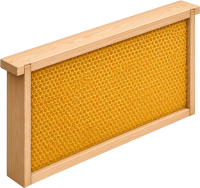
0.4
double-sided deep frames
Medium Frames of Winter Stores
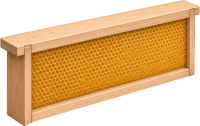
0.8
double-sided medium frames
Fall syrup is usually fed to build winter stores. Frame estimates assume the bees cure the syrup to roughly honey-like moisture.
Is sugar syrup as good as honey?
No. Honey is still the best winter food for bees.
Good capped floral honey is not just sugar. It also contains small amounts of minerals, enzymes, acids, plant compounds, and other trace materials from nectar and the hive environment. Those extras are part of what makes honey different from syrup.
That does not mean sugar syrup is useless. Properly made 2:1 syrup from refined white sugar is a practical autumn feed because it gives bees clean carbohydrate energy when a colony is short on stores. If it is fed early enough, bees can take it down, process it, dry it, and cap it before winter.
The important distinction is this:
- Honey is the preferred winter food.
- Stored autumn syrup is a practical substitute when the colony is light.
- Winter feeding is emergency feeding, not the main plan.
Do not think of sugar syrup as “making honey.” Bees can process syrup and store it, but syrup does not become the same thing as floral honey. It is stored carbohydrate feed.
For most beekeepers, the goal is not to replace all honey with syrup. The goal is to make sure the colony enters winter with enough accessible stores, arranged above and around the cluster.
Why 2:1 syrup in fall and 1:1 syrup in spring?
The syrup ratio should match the job.
Autumn feeding is about storage. The beekeeper is trying to help bees fill winter stores. A 2:1 syrup is thicker, closer to stored food, and contains less water for the bees to evaporate. That matters because autumn days are getting shorter and cooler.
Spring feeding is about stimulation and short-term support. A 1:1 syrup is thinner and more similar to light nectar. It can encourage brood rearing and comb-building when the colony is already moving into spring expansion.
That stimulation is exactly why spring syrup should be used carefully. If a beekeeper feeds 1:1 syrup too early, the colony may expand brood before the weather and forage can support it. More brood means more heat demand, more nurse bees, and more food consumption.
Use 2:1 syrup to help a colony store food before winter. Use 1:1 syrup only when spring buildup is appropriate for your local conditions.
Can you feed bees sugar water in winter?
Strongly discouraged.
Sugar water is useful in autumn, and sometimes useful in spring. It is a bad choice in real winter conditions.
Liquid feed creates several problems:
- It adds moisture to a hive that is already managing condensation.
- It can freeze.
- Bees may not be able to process and cap it.
- Opening the hive to feed syrup can disrupt the winter cluster.
If the colony is short on food once winter has arrived, switch to solid feed.
Winter emergency feeding: use solid feed
Winter feed should be solid and placed where the bees can actually reach it.
Good winter emergency feeding options include:
- Fondant
- Sugar bricks
- Dry granulated sugar using the Mountain Camp method
A prepared candy board is a fast delivery method for solid feed. If you make it ahead of time, you can add it to the hive stack quickly during an emergency feeding window instead of assembling feed while the colony is open.
The key placement rule is simple: put emergency feed directly above the cluster.
A winter cluster moves upward much more readily than sideways. Bees can starve with honey or feed only a short distance away if they cannot safely break cluster to reach it. This is called isolation starvation, and it is one of the most frustrating winter losses because the hive can still contain food. For the full explanation of the honey dome and correct frame arrangement, see the overwintering guide's section on honey frame configuration.
Before adding emergency feed, check the colony as non-invasively as possible. Use a hive scale if you have one. Use a thermal camera or infrared thermometer to locate the cluster. Listen for a response after a light tap. If the scale reading is still strong and the cluster is not near the top, feeding may be unnecessary.
If you do need to feed, be fast and deliberate. Have everything ready before opening the hive. Choose a sunny, calm day at or above 6 °C whenever possible, lift only what you need to lift, place the feed, and close the hive promptly.
The Mountain Camp method
The Mountain Camp method is a simple emergency feeding method using dry white sugar.
The usual setup is:
- Place a sheet of newspaper over the top bars.
- Leave a small opening or slit so bees can access the sugar.
- Pour dry granulated white sugar on top of the newspaper.
- Add a shim or spacer to create room.
- Close the hive quickly.
The sugar absorbs some moisture and gives the bees accessible emergency carbohydrate. It is not better than entering winter with enough honey, but it can save a light colony when conditions leave few other options.
Use plain refined white sugar. Do not use brown sugar, raw sugar, molasses, or sugar products with added minerals.
Fondant, sugar bricks, and prepared candy boards
Fondant and sugar bricks are solid carbohydrate feeds. Candy boards belong on the delivery side of the system: prepare them ahead of time, then use them to put solid sugar feed above the colony with minimal time open.
Fondant is convenient and easy for bees to consume, especially if it is soft enough to access but firm enough not to run.
Sugar bricks are simple, cheap, and useful for beekeepers who want to prepare winter feed in advance.
Prepared candy boards are useful when speed matters. In an emergency feeding situation, a ready-to-use board can be added to the hive stack quickly, with the feed already positioned where the colony can move up into it.
The exact format matters less than the principles:
- Use refined white sugar.
- Keep it directly above the cluster.
- Avoid adding unnecessary ingredients.
- Do not create a wet, dripping mess over the bees.
- Do not rely on emergency feed as a substitute for autumn preparation.
Should you feed pollen patties in winter?
No. Do not feed pollen patties in winter.
Pollen and protein support brood rearing, which is exactly why winter feeding is the wrong use case. Stimulating brood too early can create a larger hungry population before natural forage is available. In late winter, that can increase food demand at the worst possible time.
The seasonal distinction matters:
Autumn
In autumn, feed protein only if natural pollen is genuinely scarce and the colony needs support. There is a biological trade-off: declining pollen availability in late summer and autumn may help signal the transition toward long-lived winter bees, so heavy protein feeding at the wrong time may interfere with that natural transition.1
Winter
In winter, avoid pollen patties. The colony's urgent feeding need, if any, is carbohydrate. Protein can stimulate brood rearing when the colony is least able to support it.
Spring
In spring, pollen patties can help build a strong foraging force once local phenological cues suggest brood expansion is appropriate. Good cues vary by climate, but may include willow catkins, hazel bloom, skunk cabbage, maple bloom, dandelion bloom, or repeated warm flight days.
In small hive beetle regions, avoid leaving excess patty in the hive at any season. Uneaten patty is an excellent beetle egg-laying substrate.
For winter survival, carbohydrates are usually the urgent problem. Protein becomes more relevant as the colony prepares for spring buildup.
What not to feed bees in winter
Some feeds do not belong in a winter hive.
Never feed:
- Brown sugar
- Raw sugar
- Molasses
- Honeydew honey
- Old, overheated, or acid-inverted syrup
- Syrup made with vinegar, lemon juice, or cream of tartar
- Honey from unknown colonies
Use plain refined white sugar when making syrup or solid emergency feed.
Brown sugar, raw sugar, molasses, and honeydew honey contain more minerals and indigestible material than refined white sugar or good floral honey. During winter confinement, bees cannot take regular cleansing flights, so those extra solids can contribute to dysentery.
Honeydew honey is especially poor winter feed in cold climates. It can be high in minerals and difficult sugars, and some honeydew stores can crystallize into hard “cement honey” that bees cannot use well.
Avoid high-fructose corn syrup for winter feeding. Poor handling or storage can increase the risk of HMF, a sugar-breakdown compound that is toxic to bees.
Honey from unknown sources should also be avoided because it can carry American foulbrood spores. Those spores can remain infectious for a very long time, and importing them into your hive is unacceptable when safe alternatives exist.
Do not acidify, invert, overheat, or store syrup hot
Some older recipes recommend adding vinegar, lemon juice, or cream of tartar to invert sugar syrup. The idea is that inverted syrup is easier for bees to use.
Skip it.
Bees can invert sucrose themselves. Adding acid and heat increases the risk of forming hydroxymethylfurfural, usually shortened to HMF. HMF forms when sugars break down, especially with heat, acid, and long storage, and it is toxic to bees at accumulated doses.2
The practical syrup rule is simple:
- Use refined white sugar.
- Use clean water.
- Warm the water only as much as needed to dissolve the sugar.
- Do not add acid.
- Do not boil syrup.
- Do not cook acidified syrup.
- Do not store syrup in hot conditions.
- Make syrup fresh when possible.
Plain sugar syrup does not need to be complicated.
Why bees can starve even when honey is still in the hive
A winter colony does not wander freely through the hive. It survives as a cluster.
That cluster slowly moves upward through stores. It does not easily move sideways during cold weather. If the honey is off to the side, or if the cluster reaches an empty space above it, the bees may starve even though capped honey remains nearby.
This is why winter feeding is not only about quantity. It is also about food placement.
During the final autumn inspection, the colony should have a honey dome: capped stores above and around the cluster, with the upward path leading into food rather than empty comb (see the overwintering guide for the full frame-configuration breakdown). Remove queen excluders before winter so the cluster can move upward with the queen.
If you emergency-feed in winter, follow the same logic. Feed goes above the cluster, not somewhere convenient for the beekeeper.
Should you feed bees in early spring?
Spring feeding is useful, but it can also backfire.
Thin 1:1 sugar syrup can stimulate brood rearing. That is helpful when forage is imminent and the colony is ready to build. It is risky when spring is still weeks away, because more brood means more mouths to feed and more heat to maintain.
Use local cues instead of the calendar. Depending on your region, useful signs may include:
- Willow catkins
- Hazel bloom
- Skunk cabbage
- Maple bloom
- Dandelion bloom
- Consistent warm flight days
If the colony is light and brood rearing has begun, feeding may be necessary. But the goal is to bridge the gap to natural forage, not trick the colony into building too early.
Winter feeding checklist
Before winter:
- Feed 2:1 syrup in autumn if the colony is light.
- Stop liquid feeding when daytime temperatures are consistently below about 10 °C.
- Arrange capped stores above and around the cluster so the colony has a clear upward path into food.
- Use autumn hefting as a rough weight check, not as a replacement for confirming the honey dome is properly arranged.
- Remove queen excluders.
- Make sure emergency feed is ready before you need it.
During winter:
- Heavily favor a non-interventionist approach, especially in cold climates.
- Do not open the hive below 6 °C.
- Avoid opening the hive unless there is a clear starvation risk.
- Use scales, listening, or thermal checks first.
- If emergency feeding is necessary, use solid feed.
- Place feed directly above the cluster.
- Work quickly and close the hive promptly.
In early spring:
- Watch local forage cues, not just the calendar.
- Heft colonies again once conditions allow, especially to identify hives that are light before reliable nectar is available.
- Feed only if stores are low or buildup needs support.
- Be cautious with stimulative 1:1 syrup before reliable forage exists.
- Use pollen patties only when spring buildup is appropriate and bees can consume them quickly.
FAQ
What do bees eat in winter?
Honey bees eat stored honey in winter. If they were fed sugar syrup in autumn, they may also eat stored syrup that they processed and capped before winter. In emergencies, beekeepers can provide solid sugar feed such as fondant, sugar bricks, or dry sugar. A prepared candy board can be used to deliver that feed quickly above the cluster.
What is the best food for bees in winter?
Their own capped floral honey is best. If that is not available, properly stored autumn syrup made from refined white sugar is the next best practical option. Once winter has arrived, solid white sugar feed is safer than liquid syrup.
Is sugar syrup as good as honey for winter?
No. Good capped floral honey is the best winter food. Sugar syrup is a practical substitute when a colony is light in autumn, but it is mainly a source of carbohydrate energy. It does not fully replace the trace compounds found in honey.
If you need to feed, use plain 2:1 white sugar syrup early enough for bees to store and cap it before winter.
Can I feed bees sugar water in winter?
In real winter conditions, sugar water is a bad choice. It adds moisture, can freeze, and may not be processed by the bees. Use solid feed instead.
Can I feed bees high-fructose corn syrup?
Do not use high-fructose corn syrup for winter feeding. Refined white sugar is simpler, predictable, and better suited to small-scale beekeeping.
When should I feed bees for winter?
Feed for winter in late summer or autumn, while bees are still warm and active enough to process syrup. Winter feeding should be treated as emergency feeding, not the main feeding plan.
What syrup ratio should I use in fall?
Use 2:1 sugar syrup by weight: two parts sugar to one part water. This gives bees a heavy syrup with less water to evaporate before storage.
Why do beekeepers use 1:1 syrup in spring?
A 1:1 syrup is thinner and more nectar-like. It is used for spring stimulation and short-term support when brood rearing and comb-building are appropriate. It should not be used too early in cold climates, because it can encourage brood expansion before the colony can support it.
Should I feed pollen patties in winter?
No. Avoid pollen patties in winter. They can stimulate brood rearing before the colony can support it, and in small hive beetle regions they can create another pest-management problem if left uneaten. Protein feeding can be helpful later for spring buildup once local phenological cues suggest the colony is moving into active brood expansion.
Why did my bees starve with honey still in the hive?
They may have experienced isolation starvation. In cold weather, the cluster may not be able to move sideways to reach food. Stores need to be above and around the cluster, and emergency feed should be placed directly over it.

The colonies that make it through winter are the ones you stayed on top of. Track spring & fall feedings across your whole yard with hivemunk — free for your first 10 hives.
Commitment to Accuracy: If you find any errors or inaccuracies in this guide, please report them using the chat feature. I appreciate your help in maintaining high-quality content.
References
-
Mattila, H.R., & Otis, G.W. (2007). Dwindling pollen resources trigger the transition to broodless populations of long-lived honeybees each autumn. Ecological Entomology, 32, 496–505. ↶
-
LeBlanc, B.W., Eggleston, G., Sammataro, D., et al. (2009). Formation of hydroxymethylfurfural in domestic high-fructose corn syrup and its toxicity to the honey bee (Apis mellifera). Journal of Agricultural and Food Chemistry, 57(16), 7369–7376. ↶